
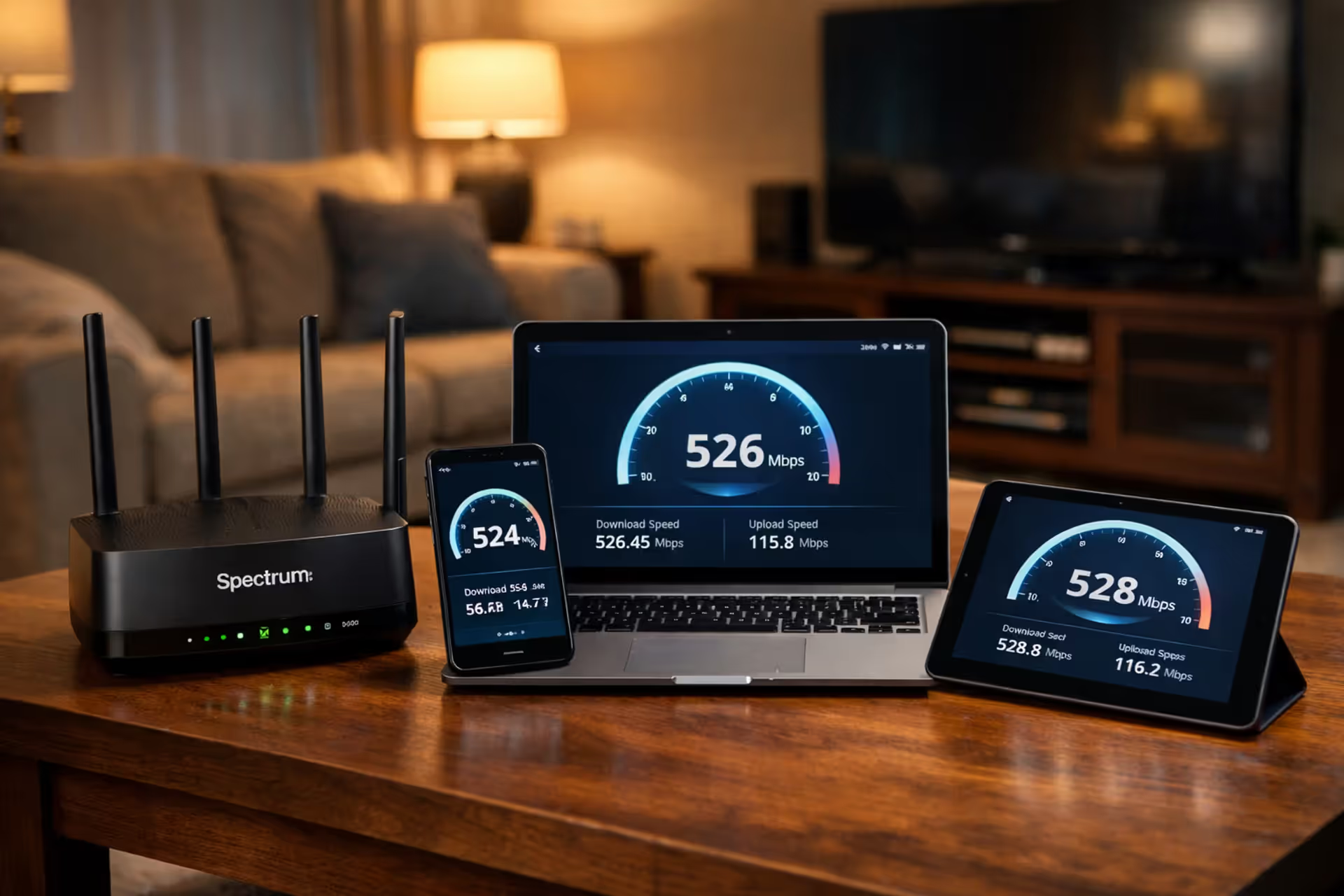
Modern Spectrum Wi-Fi router on a desk in an American living room with laptop smartphone and tablet showing internet speed indicators
Is Spectrum Broadband Internet Under the FCC's 2024 Definition?

Content
Content
Spectrum markets itself as a major cable internet provider across the United States, but whether its service qualifies as "broadband" depends on which plan you choose and how the Federal Communications Commission currently defines that term. The answer isn't as straightforward as a simple yes or no—Spectrum offers multiple speed tiers, and while most meet federal broadband standards, understanding the technology behind the service and how it stacks up against alternatives matters when you're shopping for home internet.
What the FCC Defines as Broadband in 2024
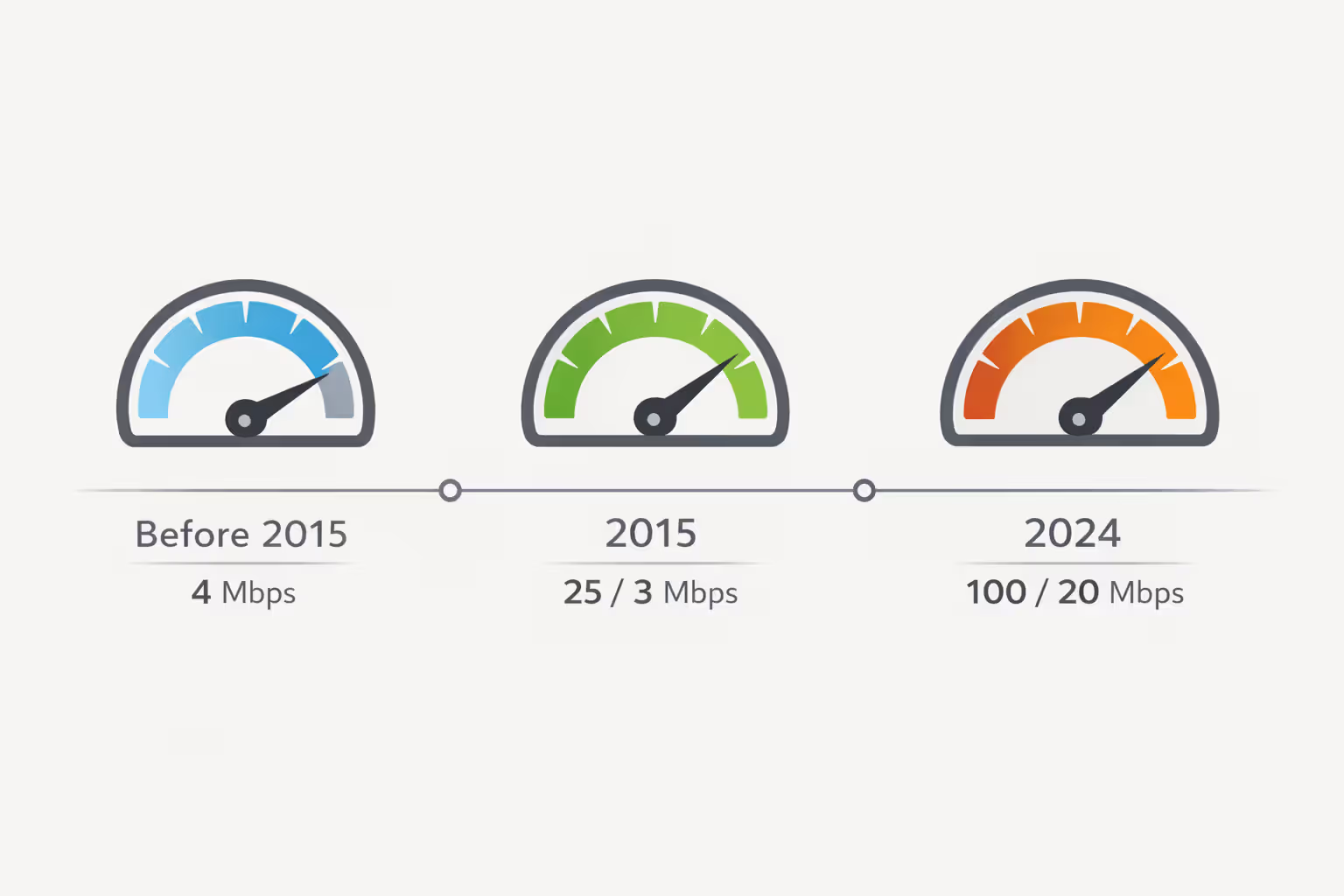
The FCC raised the official broadband benchmark to 100 Mbps download and 20 Mbps upload speeds in March 2024, a significant jump from the previous 25/3 Mbps threshold that had remained unchanged since 2015. This updated broadband definition FCC standard reflects how Americans actually use the internet today—streaming 4K video on multiple devices, participating in video calls, uploading large files to cloud storage, and gaming online simultaneously.
The shift matters because federal funding programs, infrastructure investments, and even some state-level consumer protection laws tie their requirements to this definition. Internet service providers receiving government subsidies to expand rural access must now deliver 100/20 Mbps or faster to qualify. For consumers, knowing what counts as broadband helps you evaluate whether a plan will handle your household's needs or leave you buffering during peak hours.
Author: Caroline Prescott;
Source: flexstarsolutions.com
Before 2015, the FCC considered anything faster than 4 Mbps download as broadband—a speed that barely loads a single HD video stream by today's standards. The 2015 update to 25/3 Mbps acknowledged the rise of streaming services, but even that quickly became outdated as households added more connected devices. A family of four might easily have two people on video calls, a teenager streaming on Twitch, and smart home devices all competing for bandwidth.
The 2024 standard recognizes that upload speed matters almost as much as download speed. Remote workers uploading presentations, content creators posting videos, and students submitting assignments all need robust upstream capacity—something cable internet providers have historically struggled to deliver compared to fiber alternatives.
Spectrum's Internet Technology: Cable vs. Fiber
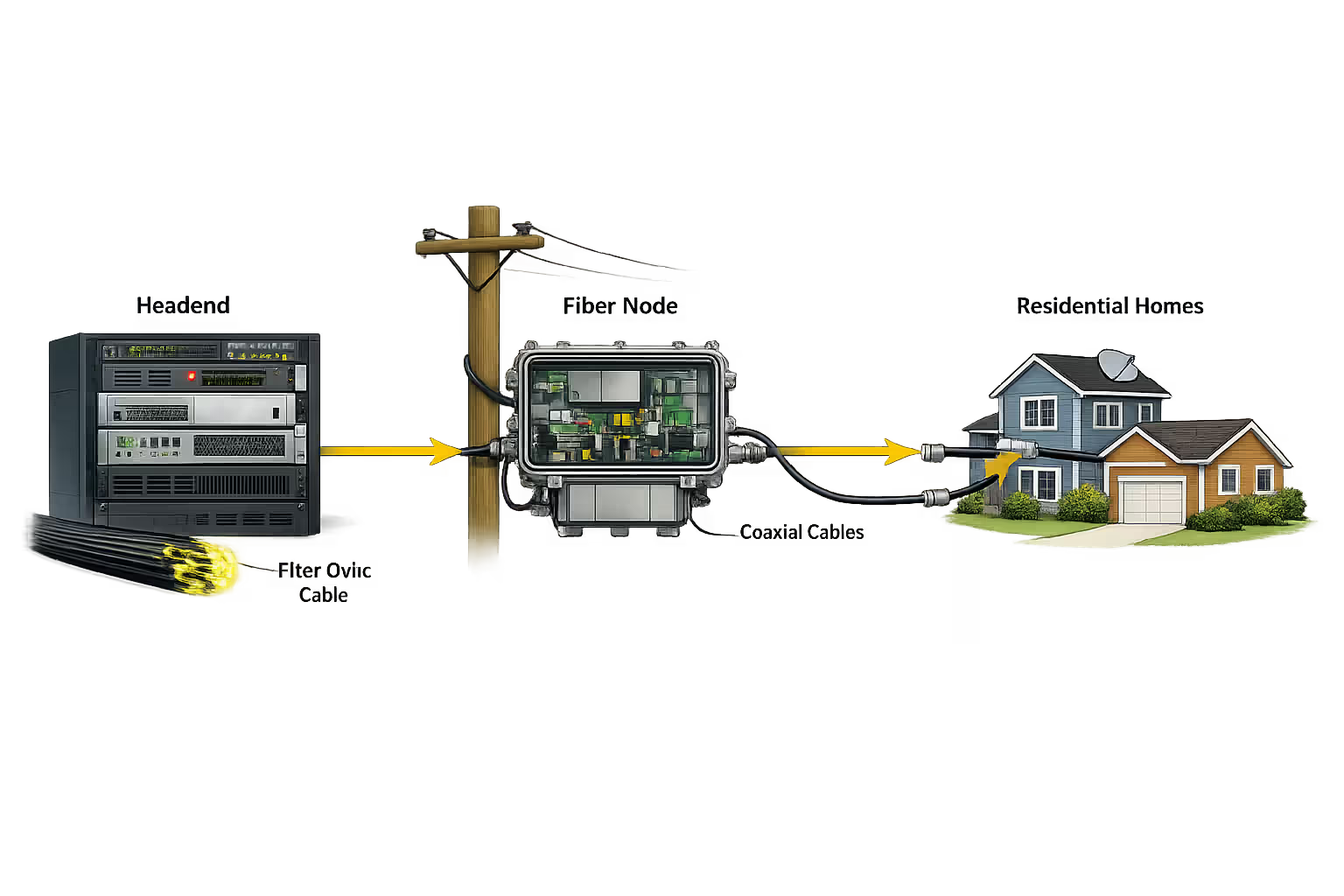
Spectrum internet type relies on hybrid fiber-coaxial (HFC) infrastructure, which means fiber-optic cables run to neighborhood nodes, then existing coaxial cables (the same ones that delivered cable TV) carry signals the final distance to your home. This Spectrum cable internet approach lets the company deliver broadband-level speeds without installing fiber directly to every residence, a process that costs tens of thousands of dollars per home in dense urban areas and far more in rural settings.
Cable internet shares bandwidth among neighbors connected to the same node. During evening hours when everyone streams Netflix or downloads game updates, speeds can dip below advertised maximums—a phenomenon called "network congestion." Fiber-to-the-home connections don't typically face this issue because each line is dedicated rather than shared.
The technology does allow Spectrum to offer download speeds up to 1,000 Mbps (1 Gig) in most service areas, which comfortably exceeds the FCC broadband threshold. Upload speeds remain the weak point: even Spectrum's fastest residential plans typically cap uploads at 35-50 Mbps, far below the symmetrical speeds (matching upload and download) that fiber providers offer.
Spectrum inherited much of this cable infrastructure through mergers with Time Warner Cable, Bright House Networks, and Charter Communications' legacy systems. The company has invested in network upgrades using DOCSIS 3.1 technology, which squeezes more capacity from existing coaxial lines, but physics still limits what copper cable can achieve compared to pure fiber-optic connections.
Author: Caroline Prescott;
Source: flexstarsolutions.com
Is Spectrum broadband by technical standards? Yes, but with caveats. The downstream speeds qualify, but asymmetrical upload speeds and shared infrastructure mean performance varies by location and time of day. Someone uploading large video files for work will notice the upload bottleneck that wouldn't exist on a fiber connection.
Breaking Down Spectrum's Speed Tiers and Broadband Qualification
Spectrum typically offers three main residential internet tiers, though exact naming and availability vary by market. Here's how the current plans stack up:
| Plan Name | Download Speed | Upload Speed | Starting Price | Meets FCC Broadband Standard |
| Spectrum Internet | 300 Mbps | 10 Mbps | $49.99/mo | Yes (download only) |
| Spectrum Internet Ultra | 500 Mbps | 20 Mbps | $69.99/mo | Yes |
| Spectrum Internet Gig | 1,000 Mbps | 35 Mbps | $89.99/mo | Yes |
All three Spectrum speed tiers exceed the 100 Mbps download threshold, making them broadband by the FCC's 2024 definition. However, only the Ultra and Gig plans meet the 20 Mbps upload requirement. The base Spectrum Internet plan falls short on upload speed, which could frustrate households with heavy upstream usage.
Pricing shown reflects promotional rates for new customers; expect increases after 12 months, typically jumping $20-30 per month. Spectrum doesn't require annual contracts for standard internet service, which means you can downgrade or cancel without early termination fees—a genuine advantage over competitors that lock you into multi-year agreements.
The 300 Mbps base tier handles most household needs: streaming on 3-4 devices simultaneously, casual gaming, and typical web browsing. The 10 Mbps upload speed becomes problematic only when you're regularly uploading large files or hosting video calls while others use the connection. A single Zoom call uses 3-4 Mbps upload, so two simultaneous calls plus background device activity can max out that upstream pipe.
Spectrum Internet Ultra at 500 Mbps offers minimal real-world improvement over the base plan for most users—streaming doesn't get smoother, and web pages don't load noticeably faster. The jump to 20 Mbps upload makes the difference if you work from home or create content. Think of it as insurance against slowdowns when multiple people need upstream bandwidth simultaneously.
The Gig plan makes sense for households with five or more heavy internet users, large file transfers, or anyone who simply wants the fastest available option. The 35 Mbps upload still lags behind fiber competitors offering symmetrical gigabit speeds (1,000 Mbps both directions), but it's adequate for most residential use cases.
Spectrum doesn't impose data caps on any residential plan, unlike competitors such as Xfinity that charge overage fees after 1.2 TB monthly. This unlimited data approach removes one variable from the Spectrum plan comparison—you won't face surprise charges for heavy usage.
Where Spectrum Broadband Is Available
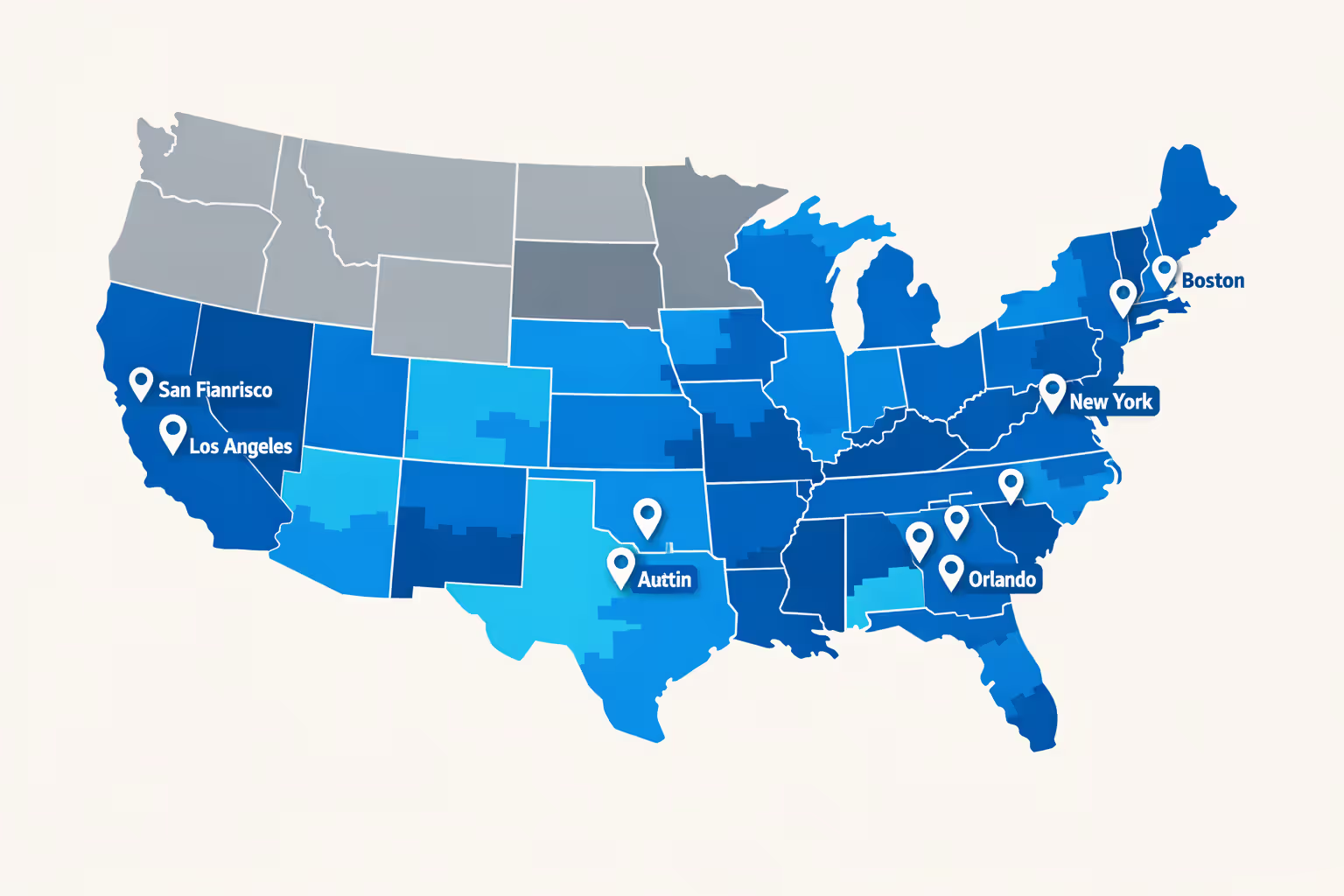
Spectrum availability spans 41 states and serves roughly 32 million residential and business customers, making it the second-largest cable internet provider in the United States. The service footprint concentrates in urban and suburban areas, with particularly strong presence in:
- New York, Texas, and California (major metro areas)
- Much of the Southeast (North Carolina, South Carolina, Georgia, Florida)
- Midwest markets including Ohio, Kentucky, and Missouri
- Parts of the Mountain West and Pacific Northwest
Rural coverage remains spotty. Spectrum operates where existing cable infrastructure already exists—the company rarely builds new lines to unserved areas unless subsidized by government broadband expansion programs. Small towns within Spectrum's service territory often have access, but homes a few miles outside city limits typically don't.
Check availability by entering your address on Spectrum's website rather than relying on ZIP code searches. Two houses on the same street might have different options if one sits just beyond the cable network's reach. The address checker shows which speed tiers are available at your specific location—some areas only offer lower-tier plans due to infrastructure limitations.
Apartment buildings and condos sometimes have exclusive agreements with specific providers, limiting your choices even if Spectrum serves the surrounding area. Property managers negotiate bulk rates or installation terms that effectively lock out competitors. Check with your building management before assuming you can get Spectrum service.
Spectrum has committed to expanding rural access in states like New York, North Carolina, and Maine through state broadband grant programs, but these buildouts take years to complete. If you're currently outside the service area, asking local officials about planned expansions gives you a better timeline than contacting Spectrum directly.
Author: Caroline Prescott;
Source: flexstarsolutions.com
How Spectrum Compares to Other Broadband Providers
Fiber providers like AT&T Fiber, Verizon Fios, and Google Fiber offer symmetrical speeds—if you get 500 Mbps download, you also get 500 Mbps upload. This balance matters for remote workers, content creators, and anyone who uses cloud backup services. Spectrum cable internet can't match that symmetry due to the inherent limitations of coaxial cable technology.
Pricing often favors Spectrum in head-to-head comparisons. AT&T Fiber's 500 Mbps plan typically costs $65-75 per month after promotions end, comparable to Spectrum Ultra, but you get 500 Mbps upload instead of 20 Mbps. The value proposition depends on whether you actually need that upstream capacity—most households don't.
DSL providers like CenturyLink or Frontier offer service in areas where cable isn't available, but speeds rarely exceed 100 Mbps and often fall well below that. Spectrum's cable infrastructure delivers consistently faster speeds than DSL in a direct comparison. If both are available at your address, cable wins on performance.
5G home internet from T-Mobile and Verizon has emerged as a cable alternative in areas with strong cellular signals. These services typically deliver 100-300 Mbps download speeds with no data caps and simple self-installation. The catch: performance varies dramatically based on tower proximity and network congestion. Spectrum provides more consistent speeds, while 5G home internet offers easier setup and sometimes lower pricing.
Satellite internet from Starlink reaches truly remote areas where cable and fiber don't exist, but at $120 per month for 100-200 Mbps speeds with higher latency than terrestrial options. Spectrum costs less and performs better for anyone within the cable service area.
Real-world performance typically runs 85-95% of advertised speeds during off-peak hours on Spectrum's network, dropping to 70-80% during evening congestion. That's on par with other cable providers and better than DSL, but fiber connections usually deliver 95-100% of advertised speeds regardless of time of day.
The new 100/20 Mbps benchmark ensures that broadband can support the applications that Americans use every day, from telehealth to remote learning to cloud computing. It's a recognition that our connectivity needs have fundamentally changed
— Jessica Rosenworcel
Common Questions About Spectrum Broadband
Making the Broadband Decision
Spectrum qualifies as broadband internet under current FCC standards across all its speed tiers when measuring download speeds. The upload speed shortfall on the base 300 Mbps plan technically disqualifies it from the complete 100/20 Mbps definition, though this limitation affects daily use only for households with significant upstream needs.
The cable technology behind Spectrum's network delivers solid performance for the price in markets where fiber isn't available or costs significantly more. Shared infrastructure means your speeds fluctuate based on neighborhood usage patterns—something to consider if you work from home during peak evening hours when everyone else streams video.
Check what other providers serve your address before committing. If fiber is available at comparable pricing, the symmetrical upload speeds and dedicated connection usually justify choosing it over cable. If your only alternatives are DSL or satellite, Spectrum's cable broadband offers substantially better performance.
Watch for promotional pricing traps. That $49.99 rate for the base plan jumps after 12 months, and Spectrum's customer retention department rarely matches the new-customer promotions when you threaten to cancel. Budget for the post-promotional rate from the start, or plan to switch providers every year or two to keep chasing introductory deals.
The absence of data caps and contract requirements gives you flexibility other cable providers don't offer. You can upgrade during busy months, downgrade when usage drops, or cancel entirely without penalties—a genuine advantage in an industry known for locking customers into rigid terms.
For most households in Spectrum's service area, the answer to "is Spectrum broadband internet" is yes, with the understanding that cable technology comes with trade-offs compared to fiber. The service delivers speeds well above the FCC threshold, handles typical household internet use comfortably, and costs less than many alternatives. Just don't expect the upload performance or consistency that fiber connections provide.
Related Stories

Read more

Read more




The content on this website is provided for general informational and educational purposes only. It is intended to offer guidance on internet technology topics, including internet providers, connection types (fiber, cable, and 5G home internet), WiFi setup, router configuration, internet speed requirements, and online security practices. The information presented should not be considered technical, legal, or professional networking advice.
All information, articles, comparisons, and technical explanations on this website are for general informational purposes only. Internet service availability, performance, speeds, equipment requirements, and security features may vary by provider, location, infrastructure, and individual network configuration. Actual internet performance and reliability depend on many factors, including hardware, service plans, local network conditions, and user behavior.
This website is not responsible for any errors or omissions in the content or for actions taken based on the information provided. Reading this website does not create a professional or service relationship. Users are encouraged to consult with their internet service provider, network specialist, or qualified technical professional for advice specific to their internet setup, equipment, or connectivity needs.